Transformed 600+ Awareness Articles Into an Authority Engine
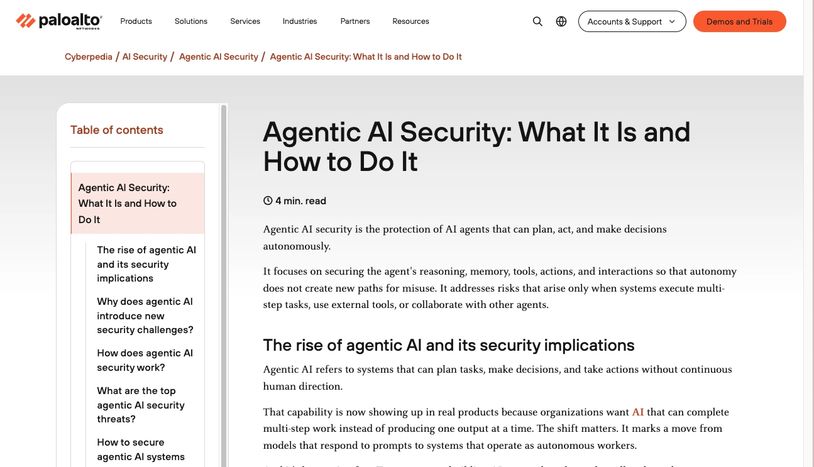
Overview
A large enterprise content library can generate enormous search visibility—but only if search engines and AI systems can understand how the information fits together.
I inherited a cybersecurity educational library containing more than 600 awareness articles covering a wide array of topics, products, technologies, and use cases. While individual pages often performed well, the library operated more as a collection of articles than as a cohesive knowledge system.
I developed a strategy to transform that library into a structured authority engine designed to enhance traditional organic SEO performance measurement while also making the content easier for generative AI search strategies to discover, retrieve, and understand.
The Challenge
The organization had already invested heavily in educational content, but scale introduced several problems.
Content existed across hundreds of cybersecurity topics with inconsistent relationships between articles. Essential pages did not always link logically to supporting concepts, relevant products, or related solutions. Some topics overlapped, while others lacked the supporting content necessary to establish strong topical authority.
The opportunity was not simply to publish more.
It was to make the existing content work together.
The strategic question became: How do we turn hundreds of individually valuable pages into a connected knowledge ecosystem that strengthens authority across the entire site?
What I Discovered
My analysis showed that the largest opportunity was structural. The site already contained significant subject-matter depth. What was missing was a consistent framework connecting:
Broad cybersecurity concepts → supporting topics → related technologies → solutions → products → conversion opportunities
This meant that valuable authority was often trapped within individual URLs rather than being distributed strategically across the site.
It also created a growing problem for AI search.
Generative systems do not simply evaluate pages independently. They retrieve information across multiple sources and attempt to understand the relationships among entities, concepts, and products.
A stronger cybersecurity content architecture could therefore support both traditional SEO and emerging AI retrieval.
The Strategy
I developed a portfolio-wide content architecture centered on topic relationships rather than individual keywords.
Each major subject area was evaluated for:
primary search intent
supporting concepts
related terminology
informational depth
product relationships
solution relationships
conversion paths
international-linking opportunities
overlapping or competing content
AI-answer opportunities
Articles were then organized into connected topic ecosystems.
Instead of treating an article such as “What Is XDR?” as an isolated SEO asset, for example, the strategy considered its relationship to concepts such as endpoint security, SOC operations, threat detection, incident response, MDR, SIEM, and the relevant commercial solutions.
That fundamentally changed the role of the content library. It became part of the site's information architecture rather than merely its blog-like educational layer.
What I Built
I developed a repeatable system for improving hundreds of articles at scale, including:
Topic architecture: Mapped related topics into logical clusters designed to strengthen topical authority and make relationships more obvious to both users and machines.
Strategic internal linking: Created linking relationships among awareness content, related definitions, products, solutions, and conversion assets.
Content hierarchy: Established clearer relationships among primary topics, supporting topics, and adjacent concepts.
SEO/GEO readiness standards: Introduced page-level recommendations designed to improve answerability, structure, entity clarity, and retrieval potential.
Content-gap identification: Identified missing supporting topics where the knowledge ecosystem lacked enough depth.
Product and solution connections: Created more deliberate paths from educational discovery into relevant commercial experiences without turning awareness content into sales copy.
The Shift
The most important change was philosophical:
Old model: 600+ articles competing and performing largely as individual URLs.
New model: 600+ pages functioning as interconnected components of a cybersecurity knowledge system.
That allowed authority to compound. A strong article could support the performance of related content, which could reinforce an entire topic cluster, ultimately strengthening product and solution visibility.
Impact
The strategy contributed to:
613 pages connected through content architecture: Hundreds of educational pages were evaluated and incorporated into a more systematic internal-linking and topic framework.
Approximately 30% organic growth: The broader Cyberpedia strategy helped support significant year-over-year organic performance growth.
Stronger topical authority: Important cybersecurity topics were supported by deeper and more intentionally interconnected content ecosystems.
Improved product discovery: Educational content became more effectively connected with relevant products and solutions.
Greater AI-search readiness: The architecture established clearer relationships among concepts, entities, and commercial offerings—important foundations for generative search retrieval.
Why This Matters Now
The project began as an SEO initiative, but its value has become even greater with the emergence of generative and agentic search.
Search engines are no longer the only machines consuming websites. AI systems increasingly retrieve individual passages, compare multiple sources, and construct answers without requiring users to follow the traditional search-result-to-webpage journey. This trend makes information architecture increasingly important.
The future opportunity is to continue evolving the library from:
Content repository → Search ecosystem → Machine-readable knowledge system
The Larger Lesson
Enterprise SEO does not always need more content. Sometimes the greatest opportunity is making the content an organization already owns work together intelligently.
Built an Executive Measurement System for AI Search
Overview
Traditional SEO reporting typically answers questions such as:
Where do we rank? How much traffic did we receive? What changed?
However, with the rise of AI search strategies, a different set of questions has emerged:
Are we included in AI-generated answers? Are we cited? Are competitors recommended ahead of us? Which sources are influencing those answers?
Perhaps the most crucial inquiry is:
What should we do differently based on what the data is telling us?
To address these inquiries, I developed an enterprise AI-search measurement framework designed to transform generative-search visibility into an actionable business metric.
The Challenge
Conventional rank-tracking systems were not designed for a landscape where a brand can influence a buyer without receiving a traditional organic click. A company may rank well on Google yet be largely absent from ChatGPT recommendations. Alternatively, it could frequently appear in generative answers but receive minimal direct citations.
Competitors might be favored due to information from analyst reports, review platforms, or community discussions rather than their own websites.
Traditional SEO performance measurement could not adequately clarify these dynamics.
Leadership needed a way to understand:
- whether the company was visible
- where it appeared
- how competitors performed
- which sources were being cited
- how strongly products were recommended
- what actions could improve performance
The Strategy
I expanded measurement beyond rankings into a model rooted in the emerging AI discovery journey:
Retrieval → Mention → Citation → Recommendation
Instead of simply determining whether the brand appeared, I crafted the framework to assess the quality and strategic importance of that visibility. Prompts were organized around buyer intent, product categories, informational queries, and competitive comparisons. Performance could thus be evaluated by product, topic, and funnel stage.
What I Built
The measurement system integrated signals, including:
- AI presence: Whether the company appeared within a generated response.
- Citation visibility: Whether the organization's own content was referenced as supporting evidence.
- Competitive visibility: Which competitors appeared within the same answer environment.
- Recommendation strength: Whether the company was mentioned or actively recommended.
- Prompt intent: Whether the query reflected awareness, evaluation, comparison, or purchase intent.
- Source influence: Which owned or third-party sources supported the answer.
- Content opportunity: What improvements in cybersecurity content architecture could enhance future performance.
The framework also covered emerging search experiences, including Google AI Overviews and major generative AI platforms.
From Reporting to Decision-Making
One of my primary objectives was to ensure that AI-search reporting didn't become another dashboard that executives viewed only once a month. Every meaningful finding had to connect directly to an action.
For example:
- If competitors appeared and we did not: Identify the missing topic or authority signal.
- If we appeared but weren't cited: Evaluate whether our owned content contained sufficiently direct, differentiated, and retrievable evidence.
- If a competitor was repeatedly recommended based on third-party sources: Identify the external authority gap.
- If an informational page consistently generated AI citations: Determine what could be replicated across related content.
This approach transformed AI visibility from an interesting metric into a comprehensive operational system.
Impact
The initiative helped support:
- 3,500+ tracked Google AI Overview placements: AI visibility grew from an early-stage measurement effort into an impactful enterprise visibility footprint.
- +193% year-over-year organic visibility: The comprehensive search program generated substantial organic visibility growth while AI-search measurement expanded.
- Executive visibility into AI search: Leadership attained a clearer framework for understanding generative-search performance beyond traditional rankings.
- Product-level intelligence: Performance became increasingly analyzable by topic, product, solution, and competitive landscape.
Where I Took the Framework Next
The next evolution advanced beyond merely measuring AI visibility itself. I began correlating AI performance with third-party authority. This involved asking not only:
"Did ChatGPT mention us?"
But rather:
"Why did ChatGPT believe we belonged in the answer?"
Potential influencing sources include:
- analysts
- review platforms
- technical communities
- partners
- customers
- media
- owned content
This creates a much stronger model for understanding modern search influence.
The Larger Lesson
The future of search measurement cannot be limited to: Ranking → Traffic → Conversion.
It increasingly needs to encompass: Discovery → Retrieval → Citation → Recommendation → Influence.

Created Product-Level SEO, GEO & Authority Systems
Overview
Scaling enterprise search poses challenges, especially when different product teams receive varied audits, spreadsheets, or one-time recommendations.
I created repeatable product-level strategy systems that integrate SEO, GEO, content, competitive intelligence, and third-party authority into a cohesive operating framework. The goal was simple: provide teams with a clear understanding of a product’s current standing, identify gaps, and outline the necessary steps to enhance AI search strategies and improve cybersecurity content architecture.
The Challenge
Large enterprise portfolios feature diverse products at various stages of market maturity. For instance, one product may excel in traditional search but struggle with AI recommendation visibility, while another might possess strong owned content yet lack independent validation. Emerging products may even face a complete absence of category demand, necessitating tailored discovery strategies.
Using a one-size-fits-all SEO playbook for all products is ineffective. Furthermore, success in search is increasingly a shared responsibility, influenced by Product Marketing, PR, Analyst Relations, Customer Marketing, Community, Content, and Web teams—all of which play a role in a product's discoverability and credibility.
The challenge lies in forming a system to coordinate these varied signals.
The Framework
I developed product-level maturity models that address the modern discovery journey:
- Search-Ready: Can search engines reliably crawl, index, and comprehend the product?
- Retrieval-Ready: Are AI systems capable of easily locating and extracting pertinent answers?
- Citation-Ready: Does the organization offer credible, differentiated evidence worth referencing?
- Recommendation-Ready: Is there external authority validating the company’s claims?
- Agentic-Ready: Can emerging intelligent systems effectively understand and interact with the digital experience in structured manners?
What I Evaluated
Each strategic product or solution can be assessed based on:
- keyword demand
- organic rankings
- content coverage
- topical authority
- competitive gaps
- AI visibility
- AI citations
- recommendation strength
- third-party mentions
- analyst presence
- reviews
- community visibility
- customer proof
- product-to-awareness relationships
- technical readiness
- future agent-readiness requirements
The outcome is not just a score; it’s a decision-making system.
Turning Findings Into Ownership
A vital component of the framework involved assigning actionable tasks to the relevant teams capable of impacting outcomes. For example:
- SEO/GEO: Addressing search demand, topic architecture, AI visibility, citation analysis, and technical discoverability.
- Product Marketing: Enhancing positioning, differentiation, creating comparison content, FAQs, and commercial proof.
- Analyst Relations / PR: Securing analyst validation, ensuring category coverage, and building media authority.
- Customer Advocacy: Fostering reviews, customer stories, and reference programs.
- Community: Encouraging practitioner discussions and meaningful participation in influential communities.
- Web / Engineering: Ensuring crawler access, structured information, and developing emerging machine-readable capabilities.
This shift ensures a robust enterprise SEO strategy is always paired with a clear execution leader.
Third-Party Authority Mapping
Additionally, I embedded a dedicated authority model for each product. Rather than focusing solely on the company's online presence, this system assesses the ecosystems that influence buyer decisions and AI recommendations.
These ecosystems may include:
- Analysts: Gartner, Forrester, IDC, and sector-specific analysts.
- Review platforms: G2, TrustRadius, PeerSpot, and other environments promoting peer validation.
- Practitioner communities: Reddit, technical forums, and specialist groups.
- Media: Trade publications, podcasts, creators, and industry experts.
- Partners: Technology alliances, hyperscalers, and channel ecosystems.
- Customers: Case studies, testimonials, and proof of implementation.
Each product is then mapped according to authority maturity: Strong → Building → Early → Missing, along with a defined improvement strategy.
Why This Changes SEO
The framework transforms SEO from simple page optimization into a comprehensive digital discovery strategy. For instance, if an AI system investigates a cybersecurity category, it may evaluate:
- the company’s website
- an analyst report
- three reviews
- a Reddit discussion
- technical documentation
- partner content
- customer evidence
Optimizing just the owned product page addresses merely one facet of this broader environment.
Business Value
This system provides leadership and product teams with a unified view of:
- Where are we strong?
- Where are competitors stronger?
- Which content is lacking?
- Which external authority needs reinforcement?
- Which team owns the responsibility for improvement?
- How will we measure progress?
This approach shifts search strategy from a series of recommendations into a scalable enterprise operating model.
The Larger Lesson
Today’s search visibility results from contributions beyond SEO alone. It is shaped by the entire information ecosystem surrounding a product.

Scaled 18 SEO/GEO Operations Using AI
Overview
Enterprise SEO creates a scalability problem. As the program becomes more successful, additional teams request analysis, recommendations, audits, metadata, competitive research, and content guidance. However, expert capacity does not scale at the same rate.
In response to this challenge, I began converting my SEO and GEO methodologies into AI-powered workflows that teams could utilize independently. I built and implemented 18 Gemini Gem agents designed to operationalize repeatable expertise across the organization, making AI search strategies accessible and efficient.
The Challenge
SEO and GEO work often involves tasks that are valuable but highly repetitive, such as:
- content audits
- metadata recommendations
- GEO scoring
- video optimization
- content-gap analysis
- competitive evaluation
- page optimization
- topic planning
- internal linking
- product mapping
- AI visibility research
Performing each analysis manually resulted in significant bottlenecks. Teams needed SEO support, yet relying on a single expert for every recurring task proved neither scalable nor strategically effective. The core question became: How can expert methodology evolve into an organizational capability rather than be limited by individual capacity?
The Strategy
I began identifying workflows with three key characteristics:
1. They occurred repeatedly.
2. They followed a reasonably consistent methodology.
3. They benefited from SEO and GEO expertise but did not require senior strategic judgment at every step.
These workflows then became prime candidates for AI automation. Instead of simply directing an AI model to "optimize this page," I encoded structured processes into specialized agents. Each Gemini GEM focused on a defined task, a clear methodology, and expected outputs, including crucial aspects of cybersecurity content architecture.
Examples of Systems I Built
The agents incorporated workflows for various areas such as:
- Video SEO/GEO optimization: Transforms transcripts and summaries into optimized titles, descriptions, metadata, and publishing recommendations.
- GEO content scoring: Evaluates pages against defined AI-search readiness criteria and prioritizes necessary improvements.
- Content auditing: Determines whether existing awareness content requires SEO/GEO updates.
- Topic and article development: Constructs structured content plans centered around cybersecurity topics and their related search ecosystems.
- Presentation transformation: Helps standardize internal materials while reducing repetitive production work.
- Product and content analysis: Produces more consistent strategic recommendations across recurring product-marketing requests.
Building Guardrails
The aim was not solely speed but also repeatability and quality control. Each agent integrated instructions for:
- required inputs
- analysis sequence
- output structure
- SEO standards
- GEO considerations
- terminology
- evidence requirements
- formatting
- quality expectations
- limitations
This effectively converted methodology into reusable infrastructure.
Organizational Adoption
The initiative expanded beyond personal productivity. These agents were rolled out for team usage, enabling stakeholders to handle common SEO and GEO tasks using standardized methods. This allowed product and content teams to receive more consistent first-pass recommendations, while specialized involvement was reserved for decisions necessitating deeper analysis or strategic judgment.
Additionally, I worked closely with six product marketing teams each week, providing insights into where recurring workflows could be automated and where human strategic guidance remained indispensable.
Impact
The program led to:
- 18 Gemini Gem agents created and implemented: Specialized AI workflows developed for recurring SEO, GEO, and content operations.
- Six product marketing teams supported weekly: AI systems facilitated greater leverage across a broad portfolio of ongoing requests.
- More consistent recommendations: Reusable methodologies diminished variation across repeated analyses.
- Reduced manual dependency: Routine tasks could increasingly be completed without requiring the same expert intervention each time.
- More time for strategic work: Automation allowed a shift from repetitive production to areas such as architecture, measurement, product strategy, and emerging AI-search challenges.
What I Did Not Automate
One critical lesson was pinpointing what should not be entirely delegated to AI.
AI excels in: structured analysis, repeatable evaluation, pattern identification, first drafts, and standard recommendations.
However, human expertise remains essential for: business prioritization, organizational politics, market positioning, stakeholder alignment, risk evaluation, and strategic judgment.
The objective: AI does not replace SEO expertise; it amplifies and scales SEO performance measurement through enhanced processes.
Why This Matters
The future of enterprise search teams will likely involve fewer manual workflows and more systems that encode advanced expertise. This evolution transforms the role of an SEO leader.
Rather than managing every individual optimization, the leader will increasingly focus on designing the standards, frameworks, agents, workflows, and governance systems through which optimization occurs.